The WEF Question Nobody Can Answer: How Do You Actually Deploy AI Responsibly at Scale?

The Executive's Dilemma: Inspiration vs. Implementation
The moment of truth happens after the closing session at Davos.
You've heard the profound challenge from the World Economic Forum: "How can we deploy innovation at scale and responsibly?" You've nodded along with other global leaders. The question is perfect. It captures everything.
Do you have an operational plan to answer it?
While your team has been building individual AI capabilities, you've been missing the architectural layer that turns those capabilities into transformed business outcomes.
The research reveals the brutal truth: 92% of organizations are increasing AI investment, but only 1% have reached maturity. Not because they lack vision. Not because they lack tools. But because they're trying to solve an organizational challenge with infrastructure solutions.
The Strategic Imperative: Why This Is Your Most Pressing Business Problem
Three converging pressures make this your central strategic priority for 2024:
- The Performance Wall
McKinsey's "1% maturity" statistic represents more than failed experiments - it represents massive capital deployment without corresponding business transformation. Boards are now demanding ROI on AI investments, and "we're piloting" has expired as an acceptable answer.
- The Human Capital Crisis
BCG's finding of a 51% 'silicon ceiling' in frontline AI adoption reveals a deeper truth: your best people are rejecting tools that complicate their work rather than liberating their potential. You're facing quiet resistance from your most valuable assets.
- The Orchestration Gap
As one Fortune 500 COO told me: "We have 47 AI agents across 14 departments. None can collaborate on cross-functional processes. We've created brilliant silos that can't have conversations."
The consequence? You either solve this or face competitive displacement from organizations that crack the code on scalable, responsible AI deployment.
The Framework: The Four Pillars of AI Maturity
Mature AI organizations excel across four tightly connected pillars.
Strategic Maturity is about deciding where AI should create a real competitive advantage. Many companies currently deploy AI everywhere simply because they can, but true maturity means using AI in ways that free people to do higher-value work.
Infrastructure Maturity focuses on whether your technical foundation can truly support AI. While most enterprises now have impressive cloud environments, the next step is building AI-optimized data models that make information instantly usable by machines.
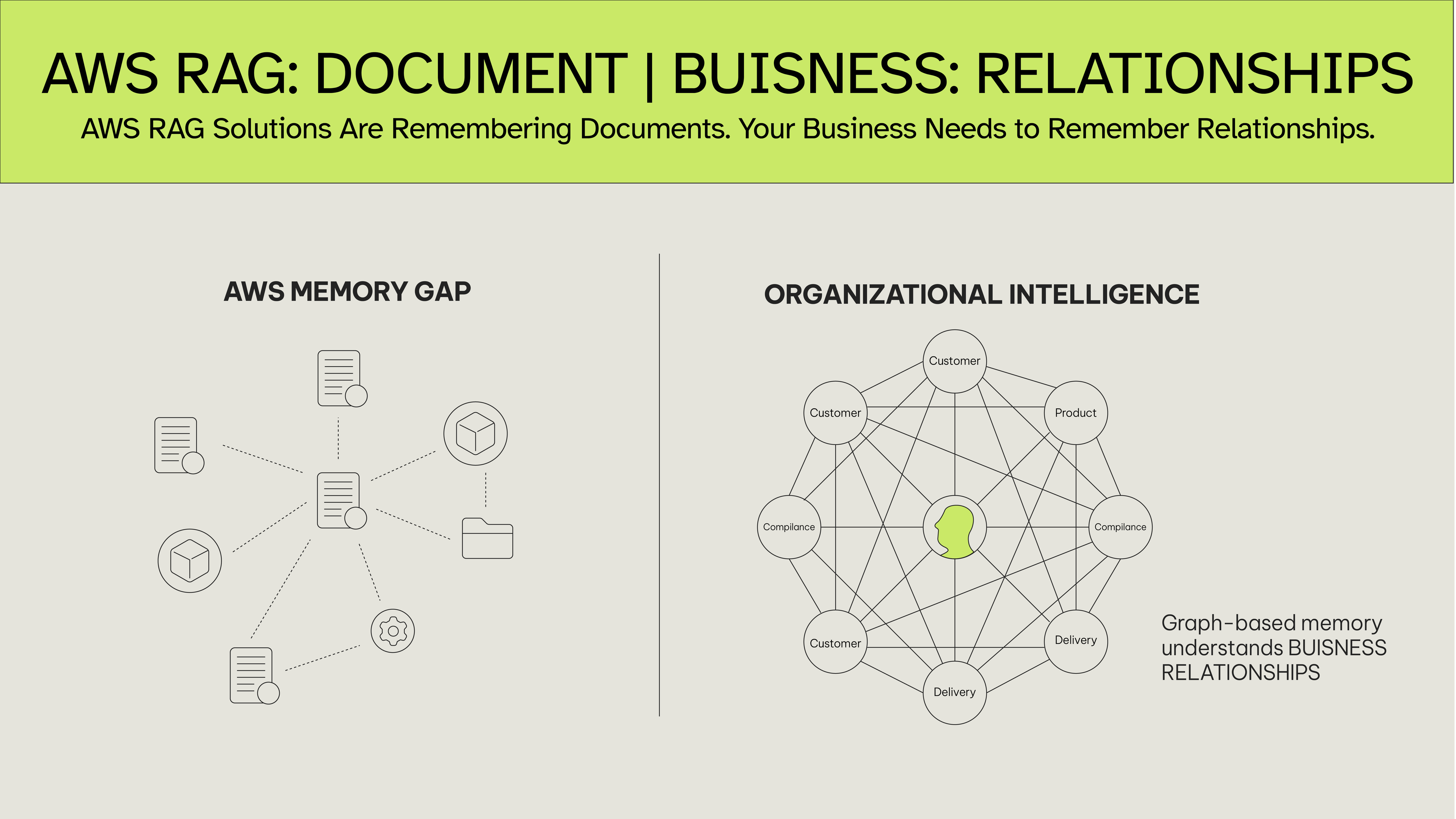
Data Maturity asks whether your data is structured for intelligent decision-making. Today, many organizations rely on data lakes and basic retrieval methods; the future lies in graph-based memory systems that continuously learn.
Team Maturity examines how AI amplifies human expertise. Companies often deploy isolated productivity tools for individuals, but mature organizations build knowledge velocity - the ability for insights, decisions, and expertise to flow rapidly across teams.
The Actionable Playbook: From Framework to Execution
1. Achieve Strategic Maturity: The Workflow Audit
Stop asking: "Where can we apply AI?"
Start asking: "Which cross-functional workflows create the most organizational drag?"
Your 30-day action plan:
- Map three critical cross-functional processes (e.g., quarterly planning, product launch, enterprise sales cycle)
- Calculate the "coordination tax" - the time spent on meetings, follow-ups, and status updates
- Identify where AI can assume the burden of coordination, not just execution
The shift: Move from deploying AI tools to designing orchestrated agentic workflows that execute entire business processes autonomously.
2. Engineer Data Maturity: Implement Organizational Memory
The research is clear: embeddings and basic RAG are no longer sufficient. Mem0's 2025 research shows graph-based memory systems deliver 26% performance improvements and 91% lower latency by understanding relationships, not just retrieving documents.
Your 90-day architecture plan:
- Audit your current AI memory architecture (most organizations have none)
- Pilot a graph-based memory system on one critical workflow
- Measure the improvement in decision quality and reduction in human intervention
The payoff: Agents that understand business context, not just search results.
3. Accelerate Team Maturity: Measure Knowledge Velocity
The ultimate competitive advantage in the AI era isn't task automation—it's organizational learning speed.
Your quarterly metric shift:
- Stop tracking: Tasks automated
- Start tracking:
- Knowledge capture rate (% of expert workflows documented)
- Synthesis efficiency (time from problem identification to solution dissemination)
- Strategic capacity liberated (hours returned to your highest-paid people)
The result: You'll finally answer WEF's Challenge #3: "How can we better invest in people?" by measuring their liberated potential, not their automated tasks.
The Governance Breakthrough: Responsible by Design, Not by Policy
Traditional governance frameworks are obsolete the moment they're published. Your AI systems are dynamic, but your governance is static.
The solution: Implement self-regulating systems through OI architecture.
Here's what this looks like in practice:
An agent handling procurement encounters a scenario outside its parameters. Instead of guessing or failing, it:
- Identifies the relevant expert based on the specific context
- Poses a precise question: "This request exceeds budget by 22% and uses non-standard terms. Approve or escalate?"*
- Learns from the decision and encodes it into organizational memory
Your governance transformation:
- Replace static policy documents with dynamic decision frameworks
- Implement human-in-the-loop triggers for novel scenarios
- Measure governance effectiveness by reduction in exceptions, not compliance checkboxes
The Salfati Implementation Framework: Bridging the Last Mile
What we provide isn't another AI tool. It's the operating system for AI-native organizations.
While AWS provides world-class infrastructure, we provide the orchestration layer that turns those capabilities into business outcomes:
- Cross-functional workflow engine that coordinates agents across departments
- Graph-based organizational memory that learns from every interaction
- Self-regulating governance systems that ensure responsible deployment at scale
Your First 100 Days: The Executive Implementation Plan
Weeks 1-30: Diagnostic Phase
- Conduct AI Maturity Assessment across all four pillars
- Identify your highest-value, most painful cross-functional workflow
- Map the coordination tax and knowledge silos
Weeks 31-60: Pilot Transformation
- Implement Organizational Intelligence on one critical workflow
- Establish baseline metrics for knowledge velocity
- Design the self-regulating governance framework
Weeks 61-100: Scale and Integrate
- Expand to 2-3 additional cross-functional workflows
- Integrate graph-based memory across pilot areas
- Measure the liberation of strategic capacity
The Strategic Payoff: From Cost Center to Competitive Advantage
Organizations that master this transition don't just improve efficiency—they build an unassailable competitive moat.
When you transform from deploying AI tools to building an AI-native organization, you achieve:
- 70% reduction in cross-functional coordination time
- 40% increase in strategic capacity for your highest-value talent
- Continuous organizational learning that accelerates faster than competitors
- Responsible deployment that scales without increasing risk
From Davos Discussion to Boardroom Agenda
The WEF question is no longer theoretical. It's your most pressing operational challenge.
The answer isn't more infrastructure. It's not more pilots. It's not more policy documents.
The answer is architecting your organization as an intelligent, adaptive system that can deploy AI responsibly at scale.
This week, shift the conversation from "What AI can do" to "How we orchestrate AI across our organization." That single reframe will do more to advance your AI maturity than any technology purchase you make this year.
Elevate your OI understanding and strategy with our new whitepaper “Beyond Infrastructure: The Organizational Intelligence Blueprint for Turning AI Capabilities into Unfair Advantages”.